Seventy Years Forward: How the Financial Women’s Association Built a Community That Changes Lives
by Robert Brown
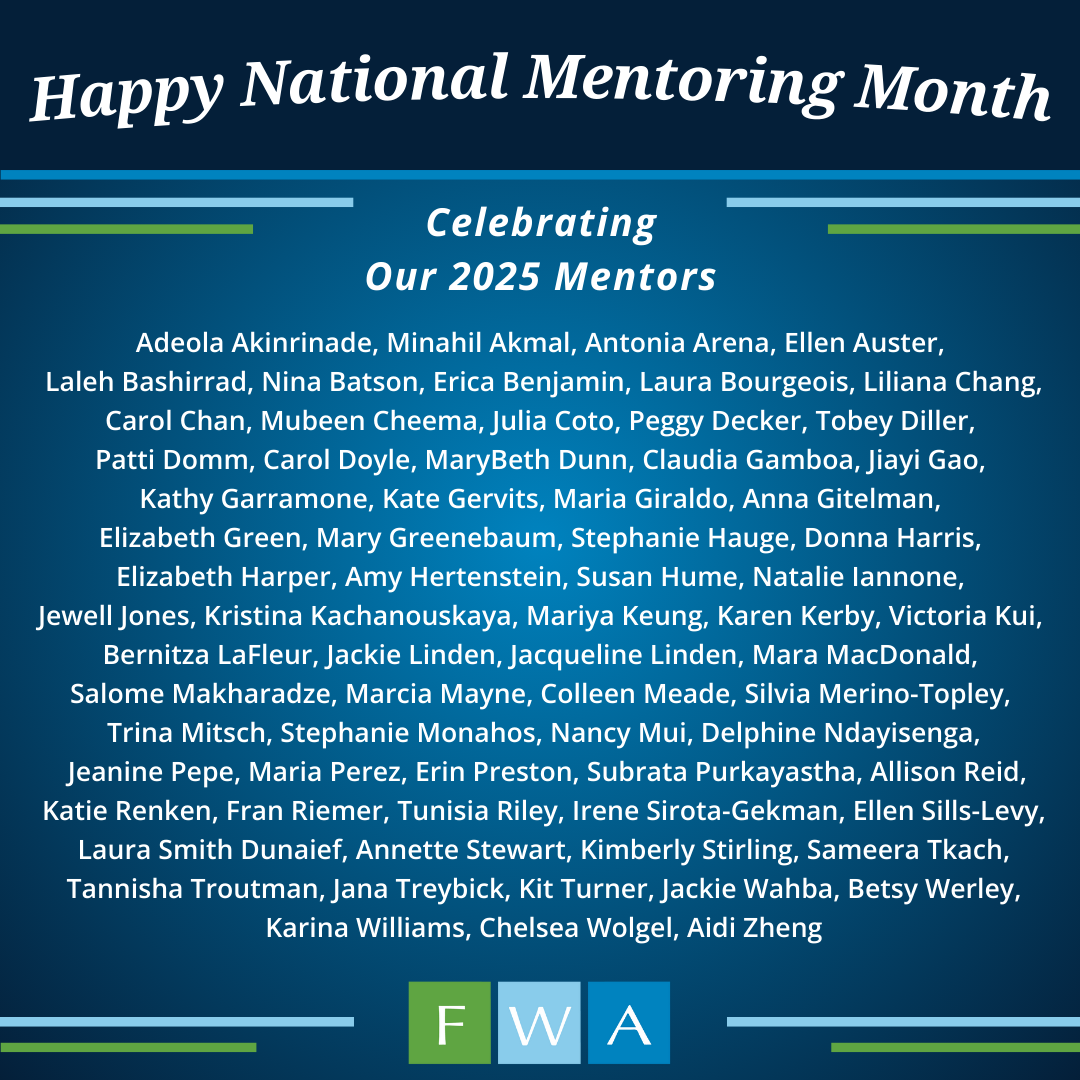
January is National Mentoring Month. In 2026, it also marks a defining moment for the Financial Women’s Association as we celebrate 70 years of advancing women in finance.
This milestone matters now. As organizations across industries rethink development, mentorship, and long-term investment in people, FWA stands firm in what has always worked: human connection, shared knowledge, and women lifting one another forward.
For seven decades, FWA has done more than convene women in finance. It has built a community rooted in mentorship, access, and action. Progress here has never been accidental. It has always been intentional. It happens because women, and male allies choose to show up for one another.
As current FWA President Albana Theka reminds us, “Mentorship isn’t about who’s ahead of you. It’s about who sees you, and who helps you see yourself.” That belief has shaped FWA from the beginning and continues to guide where we are headed next.
A Legacy Built on Mentorship
Mentorship has never been a side initiative at FWA. It has always been the foundation. Since 1975, the Wall Street Exchange Program has supported more than 1,000 interns and young professionals as they take their first steps into financial services. What began as the College Connection Program has grown into a proven launchpad that helps participants build confidence, accountability, and ownership over their careers.
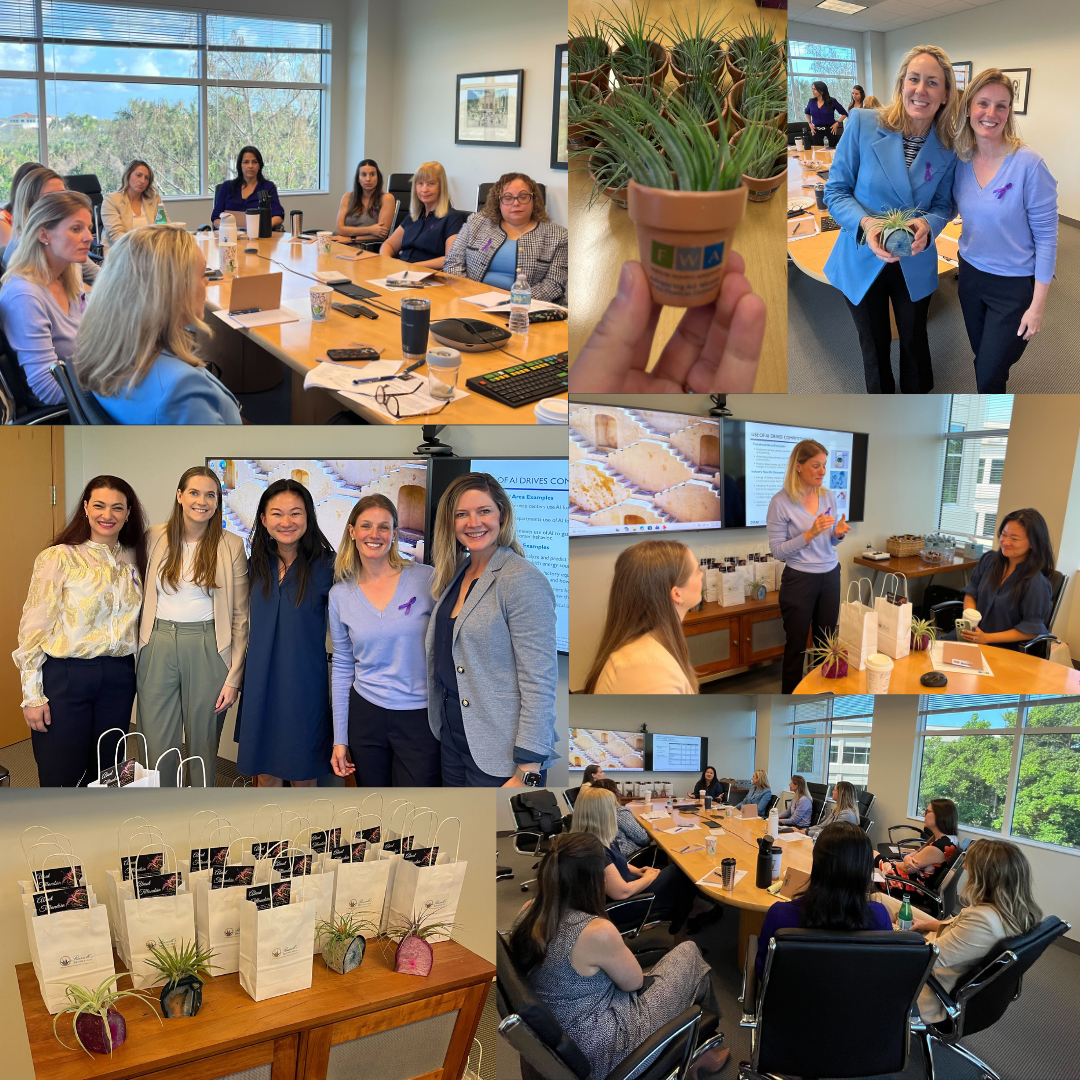
Laura Smith Dunaief, Mentor and Co-Chair of the Wall Street Exchange Program, captures the heart of that experience: “Mentoring is the heart of the FWA experience for me. It’s about preparing and supporting women, wherever they are in their careers, to own their own success and approach each situation with confidence.”
Through structured programming and honest conversation, interns learn that success is not linear and growth requires reflection. As one facilitator shared during a recent session, everything in work and life ultimately comes back to human connection.
Mentorship That Starts Early and Lasts
FWA’s commitment to mentorship begins long before college or corporate offices. For nearly 40 years, the FWA High School Mentoring Program has partnered with New York City public schools to support students in need through one-on-one mentoring, academic guidance, college preparation, and financial literacy. Many of these students are the first in their families to imagine a future in finance.
Mentors like Natalie Iannone see this work as both personal and purposeful. “I said yes to mentoring because I know how much of a difference mentors in my life have made,” she shares. “I want to pay it back and make a difference in someone else’s life.”
Nearly two decades ago, the Financial Backpack Program expanded that reach by delivering practical financial skills to high school students. To date, workshops have reached more than 2,900 students, equipping them with tools they will carry into adulthood.
“Mentoring has provided me with a lot of fulfillment,” Natalie adds. “I enjoy chatting with my mentee weekly. I feel like I am able to give back and provide guidance just like my mentors have provided me in the past.”
College Mentoring That Changes Trajectories
In 2015, FWA expanded its college mentoring footprint with the launch of the Seton Hall University Mentoring Program, extending the organization’s reach to support undergraduate women pursuing careers in finance and related fields. The program pairs students with experienced professionals who offer guidance, perspective, and advocacy at a critical stage of career formation.
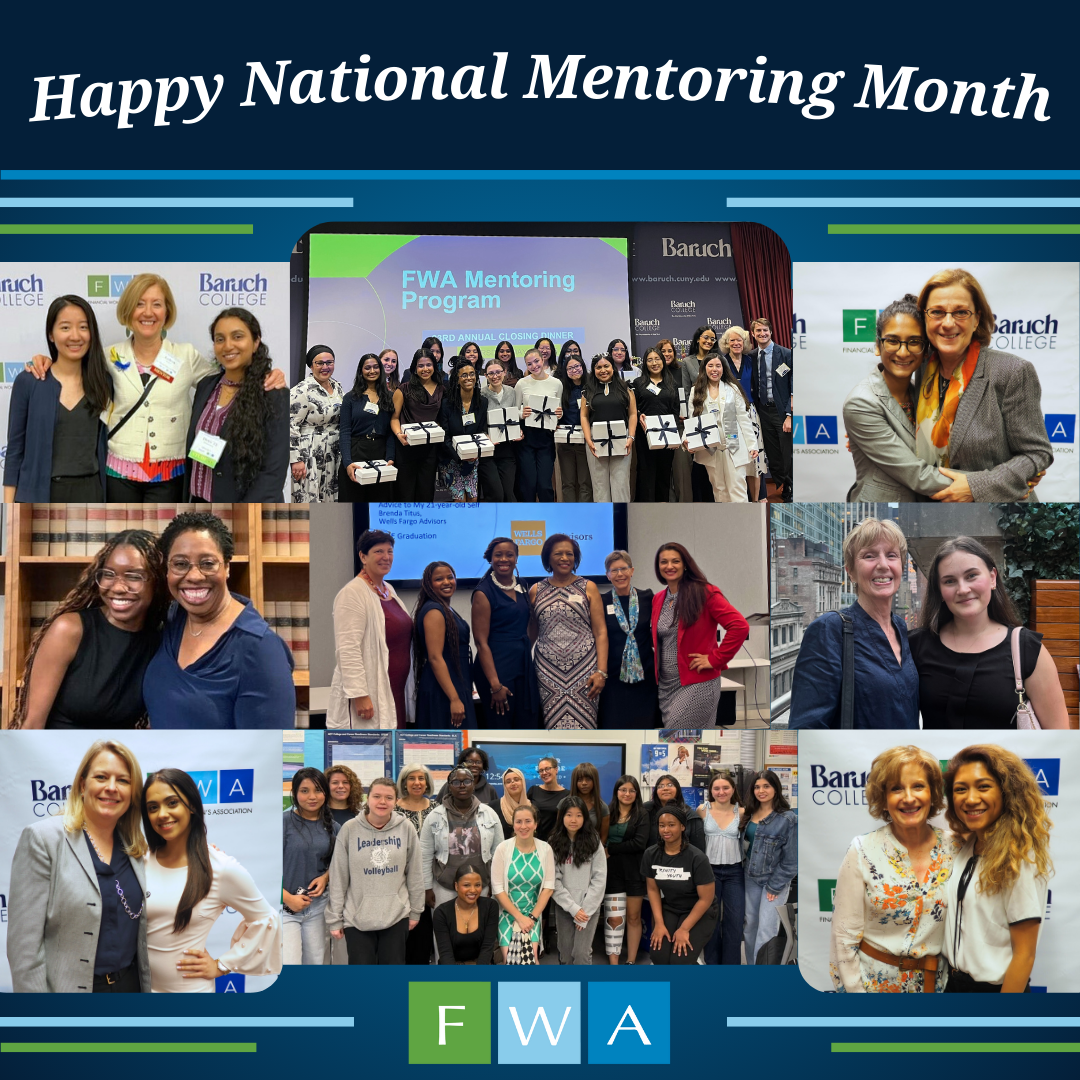
At the college level, the FWA Baruch College Mentoring Program has paired undergraduate business students with experienced professionals for more than 25 years. These relationships often become turning points.
For Baruch senior and Finance major Simran Hassan, the program helped transform uncertainty into confidence. “Before joining the program, the finance industry felt daunting,” she shared. “Through FWA, I discovered a network of incredible women who gave me the confidence to speak up and seek resources that would help me succeed.”
That confidence led to academic recognition, leadership involvement, and a highly competitive Investment Banking Summer Analyst role at Deutsche Bank.
Adelisa Music, now beginning her full-time role at Merrill Lynch, credits the program with helping her recognize her own potential. “My experience with the FWA Baruch College Mentoring Program was more than transformative,” she said. “It introduced me to people and opportunities that opened doors I didn’t know existed.”
Her mentor, Ellen Sills-Levy, Past FWA President, reflects on the mutual impact of mentoring. “This program is one of the FWA’s greatest strengths,” she notes. “I’ve learned as much from the women I’ve mentored as I hope they’ve learned from me.”
Mentors Who Lead by Example
Few leaders embody the spirit of FWA mentorship more fully than Past President Hermina “Nina” Batson. In addition to her long-standing involvement across FWA’s mentoring initiatives, Nina is also a mentor in the FWA–Seton Hall University Mentoring Program, where she continues to invest directly in the next generation of leaders. After decades in financial services leadership, she remains clear about where her legacy lies.
“Mentorship is not just about advancing careers,” Nina says. “It’s about building confidence, creating access, and shaping the future of finance, one person at a time.”
Albana Theka echoes that perspective from today’s leadership lens. “I no longer look for mentors in one direction,” she says. “I look everywhere. Because leadership grows when we stay open to learning from every voice.” And as she often reminds members, “When you find a mentor, you have found gold.”
Jacqueline Linden, FWA Educational Initiatives Chair and mentor, sees mentorship as something that extends well beyond a formal program timeline. “My mentees have continued to seek me out for advice and counsel even after they graduate and after our formal mentor-mentee relationship has ended.”
The Ripple Effect
The true measure of FWA’s mentoring impact is seen in where its mentees go next.
Former students now lead at institutions such as the Federal Reserve Bank of Boston, Goldman Sachs, Wells Fargo, Bank of America, MUFG, Deloitte, BNP Paribas, Morgan Stanley, BNY, and BMO Capital Markets. Isis Patterson, once a teen mom, is now a Community Development Analyst at the Federal Reserve Bank of Boston and holds a master’s degree from Harvard University. Brianna Perez rose to Vice President at Morgan Stanley and was named part of the firm’s MAKERS class. Electra Economopoulos built her career at BMO Capital Markets and now thrives at BNY. Mubeen Cheema, an alum of both the high school and Baruch programs, now mentors’ students herself.
This is how mentorship actually multiplies. One conversation leads to another. One opportunity becomes a career. One mentee becomes a mentor.
Seventy Years and Still Moving Forward
For more than four decades, FWA has awarded over $830,000 in scholarships. For ten years, the Pacesetter Program has connected rising stars with senior leaders. For nearly a decade, the Member2Member Mentoring Program has supported women at every career stage. As mentor Natalie Iannone puts it, “Mentoring has remained central because it’s part of the FWA’s mission. The FWA is there to help its members excel in any way they can. Mentoring is a big part of that.” Seventy years in, the Financial Women’s Association is still showing up. For students. For professionals. For the future of finance. And for 70 years to come.
Get Involved
If mentorship shaped your path, now is the moment to pay it forward. Apply to mentor. Support scholarships during our 70th year. Invest your time, your resources, or your voice. Because the next generation of women in finance is already moving forward, and they are stronger when we move with them.