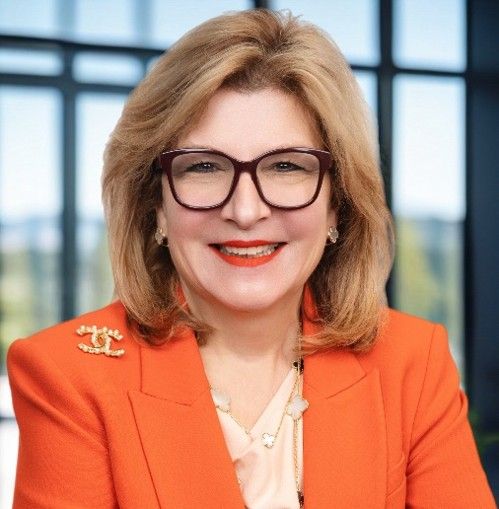
Spotlight on Jacqueline (Jackie) Linden, Educational Initiatives Chair

April 24, 2025

Empowering the next generation of female leaders in finance


Jackie Linden joined the FWA later in her banking career to expand her network, and she served on several committees before joining the board. Currently, she leads Educational Initiatives for the FWA Board.


Sherree DeCovny, co-chair of the FWA’s Marketing & Strategic Communications Committee, talked with Jackie about her 40-year career at Citi and why she finds it rewarding to support the FWA mission and champion women in finance.
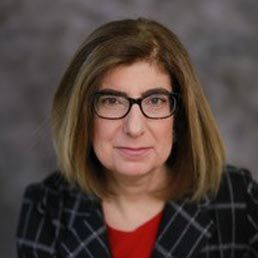
Sherree: Please tell us about your background and professional career.


Jackie:  My parents moved to the U.S. from the U.K. when I was five months old, so you could say I’m a first generation American. In addition, my siblings and I were the first in our family to achieve higher education.


I’ve always had a strong quantitative aptitude and been very analytical, which led me to major in economics at Barnard College. After earning my degree, Citibank hired me as a research analyst in the Economics Department, and that was the start of a long career in banking.


I pivoted in my career several times. Early on, I changed my focus from economics to finance because I wanted to apply my skills in a more practical, less theoretical way. This led me to pursue and obtain an MBA in Finance at NYU Stern Graduate School of Business, which I did part-time while working at Citi.


While working on my MBA, I transferred to a financial planning and analysis role in the Financial Control Department at Citibank Corporate Treasury. Subsequently, I moved into a front office role and worked in asset and liability management for Citi credit cards, managing the funding costs of Citibank’s $70 billion card portfolio. I later became the market risk manager for Citibank’s card portfolio, followed by becoming the senior market risk manager for Citigroup Treasury, a $300 billion portfolio.


Most recently, I was director of funding and liquidity risk management at Citigroup, providing firm-wide oversight and risk management for North America, Western Europe and Japan entities with balances totaling $1 trillion. Citi needed to be bailed out during the financial crisis, and I led Risk’s effort to strengthen Citi’s liquidity risk management after the crisis.


Sherree: What was your leadership journey at the FWA?


Jackie:  I didn’t have female mentors and role models in my career, so I feel passionate about supporting women in finance. To this end, I joined the FWA about 10 years ago, and I was advised that the best way to get involved in the FWA was to join a committee. The Directorship and Corporate Governance Committee (DCGC) aligned with the risk management work I was doing at Citi, so I volunteered to be the vice chair of that committee and the following year became chair.


After that, I joined the President’s Circle Committee as the relationship manager (RM) for SMBC. Mike Sebring, SMBC’s liaison, moved to Citizens Bank in 2020. The firm joined the FWA that year, and Mike asked me to be his RM. I’ve been the FWA RM for that bank since then.


After a stint as co-chair of DCGC, I was chair of the Business and Government Affairs Committee. That committee became the Programming Committee, and I’ve co-chaired it since 2020.


I also served on the Nominating Committee for two years and chaired it as a board member in my third year followed by serving on the Operations Resource Committee.


Sherree: What skills and expertise do you need to be an FWA board member?


Jackie:  I’m now in my third year as a board member. At this level, you need to demonstrate a genuine commitment to the FWA’s mission, attend meetings regularly, come prepared and actively participate in discussions and decision making. You need to contribute your expertise and connections, be willing to fundraise, provide financial support when possible, and show up for events as an FWA ambassador.


In addition, you need excellent communication abilities, financial literacy, strategic thinking, ethical behavior and the ability to build relationships. Importantly, you must be open to diverse points of view and willing to learn and stay updated on industry developments.


Sherree: How have you benefitted from your FWA experience?


Jackie:  Serving as co-chair of the Programming Committee has helped me stay engaged in finance and keep abreast of hot topics in the industry by providing impactful and relevant programs for our members with distinguished speakers. It was particularly rewarding for me to lead a fireside chat with former Citigroup Chief Administrative Officer Karen Peetz.


I’ve had an opportunity to give back by developing and supporting future FWA leaders through my work on the Nominating Committee and the next generation of financial leaders as the chair of Educational Initiatives for the FWA Board.  For several years, I’ve been a mentor for the FWA High School of Economics and Finance (HSEF) and Baruch College mentoring programs. In addition to those mentoring programs, I also oversee our mentoring program at Seton Hall University as well as our Wall Street Exchange and Financial Literacy programs. It’s been extremely rewarding to support the next generation of female leaders in finance.


Since leaving Citi, I’m also interested in leveraging the knowledge and skills I’ve acquired through my long career to pursue consulting opportunities and positions on other boards.


Sherree: How has the FWA changed, and how would you like to see the organization evolve in the future?


Jackie:  During Covid, the FWA had to move to virtual programming and keep our members engaged while remaining relevant and addressing real challenges facing our membership and our own solvency issues. In the last year or two, we’ve moved to more in-person programming and have placed greater emphasis on technology and its reshaping of the financial landscape.


The board recently held a retreat to discuss strategy, resulting in specific initiatives to improve programming content and process; augment membership and engagement; and enhance mission and leadership culture. We’ve also discussed a potential geographic expansion.


Sherree: What would you still like to do at the FWA?


Jackie:  This is my first year chairing Educational Initiatives for the FWA board. We’ve made a lot of progress this past year, especially with re-energizing the HSEF mentoring program, which became dormant during Covid. This past year, we’ve received additional funding for this program and plan to grow the HSEF mentoring program from a single grade of seven mentees to 20 mentees spanning three grades. We’ve introduced new workshops at HSEF and have more planned. We’re also brainstorming ways to increase funding for all our mentoring programs and collaboration among them.


Sherree: What career advice do you have for our current and prospective members?


Jackie:  It’s so important to build your network and find sponsors. As an FWA member, join committees and take on leadership roles. Be confident in your abilities, and don’t be afraid to take risks in your career. Apply for roles you are interested in, even if you’re not 100 percent qualified.


The FWA provides members with access to a large external network and an opportunity to be mentored through the Member2Member Program. It also provides members with many leadership opportunities to stretch and expand your skills. The FWA has a great mission, and it’s worth devoting your time and energy to advance women in finance.
August 13, 2026
by Robert Brown "I believe that mentorship is incredibly valuable, especially during college as you are navigating a lot of changes and first-time experiences." For Cailyn Kitchens, a junior at Baruch College, those words aren't simply a reflection on her college experience. They've become the foundation of how she's prepared for her future. Following her junior-year internship at Scotiabank, Cailyn credits the Financial Women's Association's Baruch College Mentoring Program and her mentor, Laleh Bashirrad, Managing Director at BNP Paribas, with helping her approach one of the most pivotal chapters of her college journey with greater confidence, curiosity, and perspective.
August 6, 2026
On July 7, 2026, interns in the FWA’s Wall Street Exchange (WSE) Program came together virtually for the fourth session of the summer, titled “Strategic Communications,” sponsored by Joele Frank. Jordan Resnick, HR Specialist, and Heather Wallach, Talent Acquisition Manager, introduced interns to Joele Frank and the world of strategic communications, a field many interns had never considered as part of the financial services landscape. Jordan and Heather explained that Joele Frank advises companies through their most consequential moments, from mergers and acquisitions to shareholder activism, restructuring, leadership transitions, and crisis response, ranking as the #1 U.S. M&A PR advisor and #1 shareholder activism defense advisor in the industry. To bring the firm’s work to life, Jordan and Heather walked interns through several high-profile engagements, including Joele Frank’s support of Warner Bros. Discovery, a current client, as an example of how the firm helps companies navigate high-stakes, high-visibility situations in real time. The discussion underscored that effective strategic communications require not just managing a narrative, but protecting a company’s credibility with every audience watching, from investors and employees to the media and the public. Jordan and Heather also broke down the many disciplines that fall under the strategic communications umbrella, including investor relations, corporate and media relations, governance and corporate stewardship, design, and digital strategy. They emphasized that the firm hires like a law firm, bringing on Account Associates directly out of undergrad, and encouraged interns interested in the field to build strong writing skills, stay current on financial news through outlets like The Wall Street Journal and Bloomberg, and consider Joele Frank’s summer internship or full-time Account Associate programs as a path into the industry. Interns had the opportunity to ask questions throughout the presentation before breaking into small groups to discuss their key takeaways from the session and reflect on what they had learned so far this summer. Many interns shared that the session reshaped their understanding of what a career in PR actually looks like, moving past common misconceptions to reveal a discipline built on strategy, judgment, and relationships. Several groups also highlighted the session’s emphasis on soft skills, noting how much communication, adaptability, and emotional intelligence matter in a field so often mistaken for being purely about writing press releases. At the conclusion of the session, the WSE spun the wheel to award a CFA Society Student Membership, sponsored by the CFA Society, to Sarah Convery. Congrats, Sarah! A huge thank you to Jordan Resnick, Heather Wallach, and the entire Joele Frank team for giving interns a behind-the-scenes look at the strategic communications industry. The WSE Co-Chairs and Committee extend their sincere thanks and appreciation to the President’s Circle Firms, the Partnership Circle Firms, and the Friends of FWA for their unwavering support and generosity to the interns and the Wall Street Exchange Program. 
July 30, 2026
On June 23, 2026, the FWA's Wall Street Exchange (WSE) Program 2026 cohort gathered virtually for the third weekly session of the program. The session was sponsored by Knopman Marks, a boutique NYC-based firm known for its high-performance training for securities licensing exams. Brian Marks, Co-Founder and President of Knopman Marks & Highwire, led a practical, high-energy conversation titled "Foundations for Professional Excellence." The first topic that Brian discussed was the habits that drive a successful early career and why those habits matter well beyond an internship. The skills interns build now are the same ones that separate a good intern from a great one; and that later separate a good professional from a high performer. He described high performance, not as a matter of raw talent, but rather as a set of behaviors one can practice. The habits put in place early are the ones that compound. The interns who start practicing them now are the ones who carry them from an internship with limited responsibilities into executive-level responsibility later. The interns then reviewed a series of four credibility builders and four credibility killers, proactive behaviors that shape how senior professionals come to trust a young professional. Owning your mistakes and learning from them is a key credibility builder and surprising your manager with bad news at the last minute is a major credibility killer. The interns then rated themselves on a Strategic Action Matrix, a four-box framework charting how strategy: “Are you focused on the right things?” interacts with execution: “Are you doing the work to get there?”. He asked interns to consider one or two new habits they could put to work immediately. Brian impressed upon the interns that professional excellence is thinking strategically and executing well, while stepping outside their comfort zone, stretching past their limits and building resilience when the plan changes. Brian then introduced the five strategies in The Intern Success Playbook, emphasizing that interns are building their personal brand every day through what others observe. Whether it's staying focused instead of constantly checking a mobile phone or taking the initiative to connect with colleagues, everyday actions shape how others perceive them. His five strategies focused on working and communicating smarter, building authentic relationships, and paying close attention to perception and details. The interactive format kept energy high. Interns enjoyed the live Q&A, the quiz, and the chance to ask questions. A screen full of Zoom hearts spoke to the value they found in his advice. A huge thank you to Knopman Marks and Brian Marks for investing their time and expertise in the WSE 2026 cohort. The session concluded with the WSE Committee awarding intern Sarah Convery a CFA Student Annual Membership, sponsored by the CFA Society. The WSE Co-Chairs, Gerri Bostick and Laura Smith Dunaief, and the WSE Committee extend their sincere appreciation to Brian Marks and Knopman Marks for their support in making this virtual session a success. We also thank the FWA President Albana Theka, FWA leadership, volunteers, sponsoring firms, and participating employers for their continued commitment to providing this valuable experience to the next generation of financial professionals. 
July 23, 2026
Interns participating in the 2026 Wall Street Exchange (WSE) Program gathered virtually for the program’s second session, an interactive panel discussing “Networking Best Practices.” Sponsored by S&P Global, Northwestern Mutual, and Wells Fargo, the session brought together three financial services professionals to share how they have built and sustained meaningful relationships throughout their careers. The discussion was moderated by Dan Yu, Co-Founder of FutureProof You and Director of Partnerships at the talent development nonprofit Ascend Leadership . After a long career on Wall Street, Dan pivoted to recruiting and career coaching, work that has since taken him from coaching college students to C-level executives. He set an energetic, conversational tone for the panel, joined by Jena Angeliadis, Executive Director and Senior Lead Product Manager at Wells Fargo; Antonietta Gaudio, Recruiting Operations Manager at Northwestern Mutual; and Christina Siekierski, Senior Product Manager at S&P Global.  Jena traced her own path across American Express, JPMorgan Chase, and now Wells Fargo, encouraging interns to think of networking less as a transaction and more as an ongoing practice built on curiosity and follow-through. She pointed to her own career transitions, including launching the Chase Sapphire Reserve for Business card, as proof that relationships built early in a career often resurface in unexpected and valuable ways later on. Drawing on nearly 14 years in talent acquisition, Antonietta spoke about her “white glove” approach to building trust, urging interns to lead every interaction with empathy and authenticity rather than a polished pitch. She reminded the group that confidence in networking is built from within, and that the goal of any conversation should be genuine connection, not simply a foot in the door. Christina offered a product manager’s view of networking, describing how cross-functional relationships across product, commercial, and client teams at S&P Global have been just as important to her growth as relationships built outside the office. She encouraged interns to treat every colleague, not just senior leaders, as a connection worth investing in. To help interns put the panel’s advice into action, Dan closed the session with five “homework” assignments to complete in the weeks ahead: Update your LinkedIn profile Build a Linktree or dotcard Join or start a virtual networking group Reply to your three oldest unanswered text messages, using voice text Call someone you haven’t spoken with in a year A huge thank you to Dan Yu, Jena Angeliadis, Antonietta Gaudio, and Christina Siekierski, and to S&P Global, Northwestern Mutual, and Wells Fargo, for helping interns build the confidence and tools to network with purpose. At the conclusion of the session, the WSE Committee awarded a CFA Society New York student membership to Angela Lin. The WSE Co-Chairs and Committee extend their sincere thanks and appreciation to the President’s Circle Firms, the Partnership Circle Firms, and the Friends of FWA for their unwavering support and generosity to the interns and the Wall Street Exchange Program.
More Posts