Strong governance, risk, and controls expertise supports the FWA’s mission
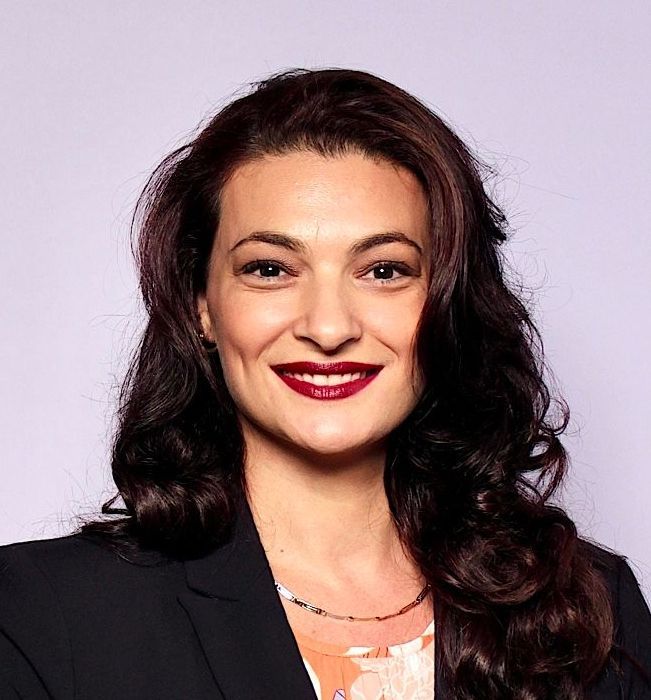
If you have a question about driving technological, financial and strategic transformation, Susan Migliaccio is your go-to expert. With over 20 years of experience, she has a proven track record of advising executives in complex organizations on intricate challenges across finance, operations and technology to achieve their goals. Her unique ability to solve problems from multiple functional perspectives provides valuable insights to her clients and teams. She is adept at building strong relationships with clients and bringing the right people together to achieve consensus and drive change.
Sherree DeCovny, co-chair of the Marketing & Strategic Communications Committee, recently sat down with Susan to discuss how she has brought her expertise to various leadership roles within the FWA.
Sherree: Susan, to start off, please tell us about your professional background.
Susan: I studied Accounting in college, and I have my CPA. I began my career in audit, performing financial statement audits at Deloitte before being recruited by PwC. In 2006, I joined PwC's consulting arm. At PwC, I rose to the level of director, working with clients across diverse industries and sizes – from individuals to Fortune 100 companies. My role was to advise them on complex operations and finance matters, ranging from crisis management and resolution to general business advisory. I had the privilege of working on the ground with global clients in their local country operations, partnering with local PwC colleagues to incorporate cultural considerations into our approach and outcomes.
In 2018, I joined Bank of New York as part of the Transformation and Program Management team, providing leadership and oversight on high-priority, cross-functional, strategic bank efforts. My portfolio of work included platform conversions, business relocation and digital transformation to improve the user experience, enhance operational efficiency and mitigate risk.
Currently, I’m a director in Securities Services at BNY, where I lead change management initiatives across the Asset Servicing client service teams. I’m responsible for planning, executing and scaling new ways of working to enhance internal and external client experiences, protect and grow client relationships and drive optimal outcomes for both clients and the firm.
Sherree: Can you tell us about a time when you had to pivot in your career?
Susan: Absolutely! Anyone who has a long career will find themselves pivoting at one point or another. My biggest pivot was going from the consulting world to being an in-house strategy and change management agent. I had been a consultant for over 10 years at that point, and my biggest challenge was going from a billable environment to an in-house consultant and advisor. The best part of making this transition is that I get to see the results of my projects and see the continuation of my efforts. I would be happy to talk to fellow FWA members who are considering that change in their careers.
Sherree: How long have you been a member of the FWA, and why did you decide to join?
Susan: About 15 years ago, I started attending some networking events at my firm to broaden my connections. Some people I met suggested that I should check out the FWA as well. I was so impressed by the caliber of the FWA’s programming and the people that I became a member.
Sherree: What leadership roles have you held in the FWA, and how have you benefited?
Susan: Soon after I joined the FWA, I became an active member of the Professional Services and Liaison Committee, which created programming for accountants, lawyers and other professional services providers. Volunteering on a committee gave me an opportunity to get to know other members in a smaller, regular/recurring setting and quickly build meaningful relationships within the organization.
The following year, I was asked to co-lead the Professional Services and Liaison Committee, which I did for a couple years. I served as the FWA’s treasurer for two years. I stepped off the board temporarily, and then returned a couple years later as chair of the Audit Committee – a role I held for three years.
More recently, I was appointed to be a member of the Operations Resource Committee (ORC) along with Katrin Dambrot and Stephanie Hauge. Our remit is to support the FWA’s office – sometimes by taking on special projects. For example, this committee reviewed our policies and practices to support the FWA’s move to a virtual office, from inception to its current mature state, to ensure alignment with the risks and opportunities associated with this change. Ultimately, our goal is to leave the FWA in a better place than when we started.
On reflection, each role and committee I participated in has a specific focus, so I was able to see the FWA through a few different lenses. Along the way, I’ve had the opportunity to share and learn from a diverse group of people who have gained unique expertise from working in different companies. It’s been a very enriching experience.
Sherree: How would you like to see the FWA evolve in the future?
Susan: The FWA’s vision is to promote professional development and advancement of all women through education, mentorship, networking, alliances and advocacy across the financial sector. As such, I’d like to see the organization continue to identify relevant educational programming for our members and students and be seen as a resource for the latest thought leadership. It’s so important for us to reflect the way the financial services industry is innovating and evolving.
Sherree: How have you benefited from the FWA?
Susan: I treasure the friendships and relationships I’ve built through the FWA. It’s fantastic to partner with like-minded individuals who have diverse experiences and goals. I always have someone to call when I need to get feedback on my ideas. Importantly, the experience and skills I've gained through my volunteer roles have been invaluable in helping me to drive my career forward.
My advice to members is join a committee and be an active contributor because you get out of the FWA what you put into it.
Enhance your FWA involvement today!