By Sherree DeCovny
Back in 1785, Scottish poet Robert Burns wrote, “The best-laid plans of mice and men often go awry.” The line still resonates today: even the most carefully constructed plans can be disrupted. What ultimately determines success is not perfect foresight, but adaptability and the ability to pivot when conditions change.
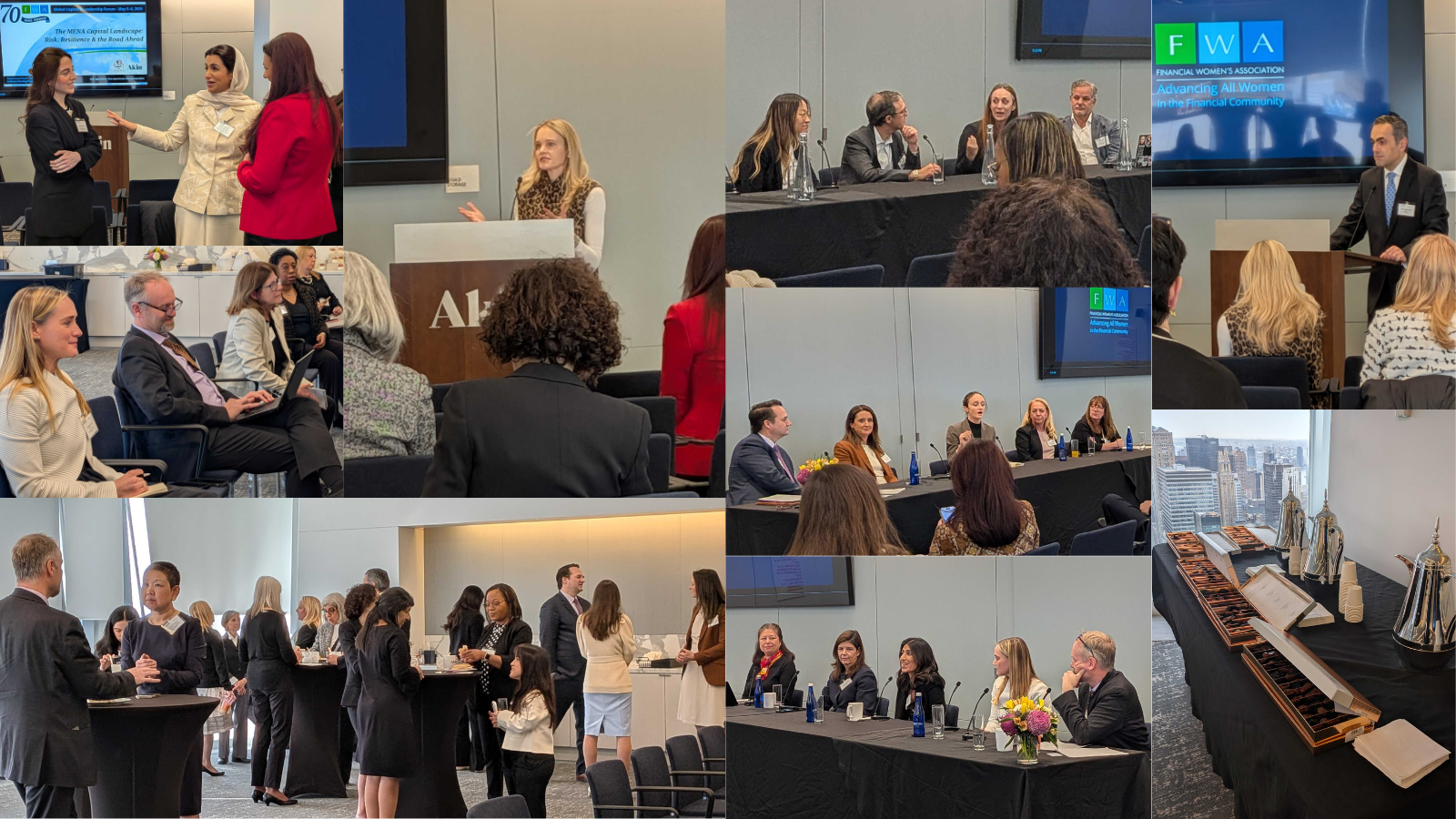
That lesson was brought into sharp focus for this year’s International Business Conference. Originally planned for the UAE in April, the event had to be completely reimagined when conflict with Iran escalated in February. Months of preparation were set aside, and the format was rebuilt in a matter of weeks. The result was a hybrid approach: a virtual lunch panel on May 5, followed by a half-day in-person gathering in New York City on May 6 — hosted at Akin in partnership with ABANA.co, with hospitality from HE Amna Almheiri and the UAE Consulate in NY — bringing together nearly 100 participants.
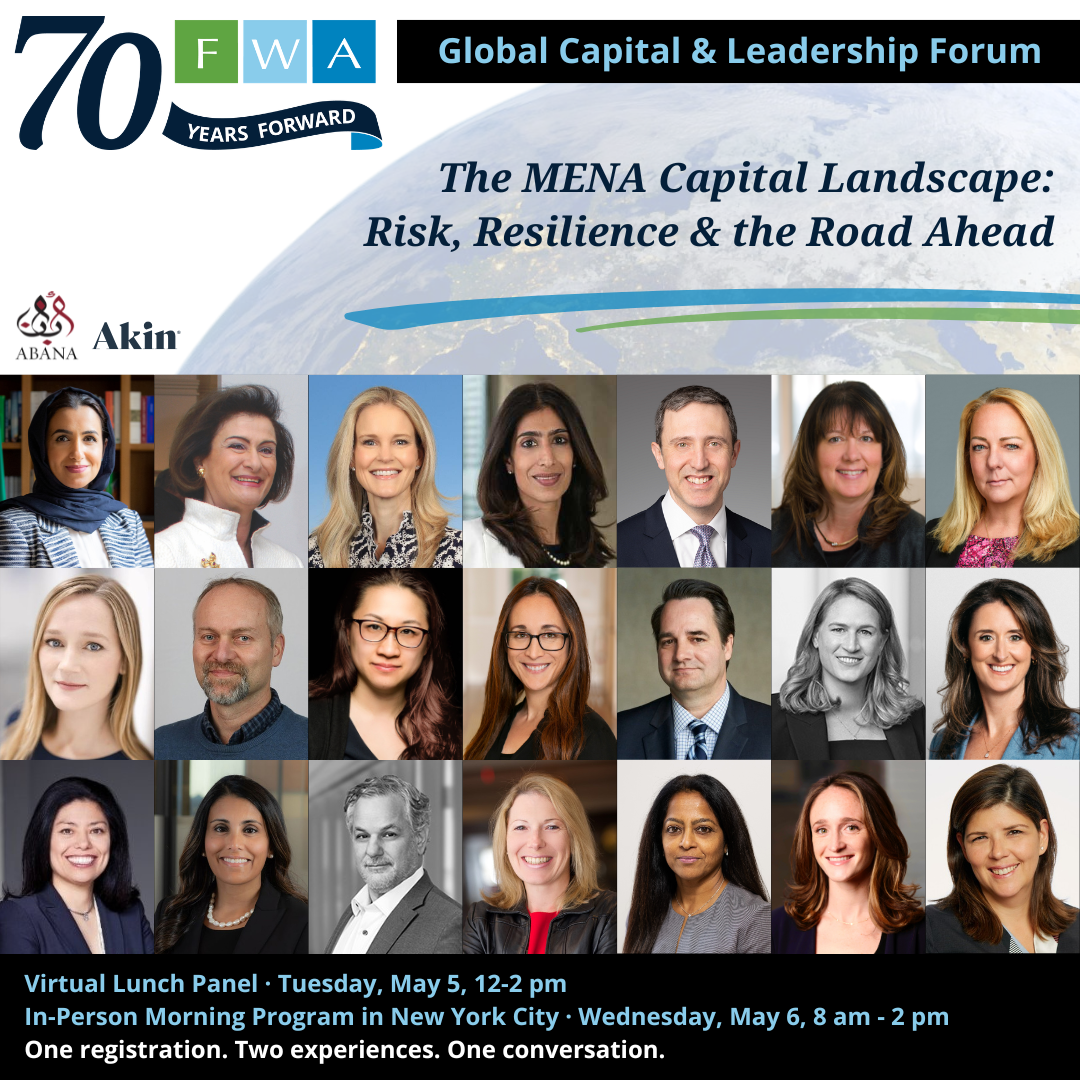
More than 20 senior speakers — including diplomats, economists, investors, bankers, lawyers, educators, technologists and analysts — examined the forces reshaping global capital flows and the implications for markets, policy and long-term investment strategy.
A central theme was the shift away from globalization toward a more fragmented, multipolar world. This is reshaping trade, supply chains and investment decisions, particularly in strategic sectors such as energy, semiconductors and critical minerals. Competition between the U.S. and China is increasingly defined by artificial intelligence leadership, spanning access to talent, chips, computing infrastructure and energy capacity.
AI investment continues to support equity markets, especially in technology, even as concerns grow about energy constraints, uneven growth and concentrated market performance. Alongside this, defense spending, infrastructure investment and fiscal stimulus remain important drivers of economic activity.
Inflation remains the dominant macroeconomic risk. Structural pressures — including tight labor markets, aging populations, constrained immigration, energy volatility and supply chain fragility — suggest inflation may remain higher than historical norms. Some participants noted that markets may be underestimating the risk of further interest rate increases, particularly if geopolitical tensions push oil prices higher and feed into broader price pressures.
Energy has become a strategic and economic concern. AI-driven demand for electricity, combined with geopolitical instability, is reshaping investment priorities. Energy is now increasingly viewed through the lens of security and resilience, not just cost and sustainability.
While renewables, battery storage and nuclear remain central to long-term decarbonization strategies, near-term constraints have elevated the importance of oil and gas. As a result, investors and governments are pursuing diversified energy portfolios, reflecting both climate goals and energy security concerns.
Capital is flowing into infrastructure, liquefied natural gas, power generation and data centers tied to AI expansion. However, investors are applying more stringent due diligence, particularly around regulatory risk, stranded assets and technological uncertainty. The emerging consensus is an “all-of-the-above” energy strategy.
Generative AI is accelerating productivity across industries by streamlining coding, research, communication and operations. Organizations are embedding AI into everyday workflows, enabling a shift toward higher-value work.
At the same time, concerns are rising around cybersecurity, fraud and overdependence on AI systems. AI-enabled impersonation, phishing and automated vulnerability discovery are increasing risk exposure, prompting stronger governance and security frameworks. Agentic AI, in particular, was highlighted as both an opportunity and a potential risk multiplier.
Finally, sovereign wealth funds, managing roughly US$13 trillion globally, are evolving from passive investors into strategic actors. Geopolitical uncertainty and technological disruption are making outcomes less predictable and challenging traditional investment cycles.
As a result, capital allocation is increasingly focused on resilience, flexibility and long-term optionality. While diversification away from U.S. assets is often discussed, the scale, liquidity and depth of U.S. markets continue to anchor global portfolios. Sovereign investors are also pursuing broader national objectives, including knowledge transfer, industrial development and economic diversification alongside financial returns.
In many ways, the discussions at this year’s conference brought us full circle to Robert Burns’ reminder that even the best-laid plans can change course without warning. Whether in geopolitics, markets, energy systems or technology, certainty is increasingly elusive. Yet the same volatility that disrupts plans also creates space for reinvention. The ability to adapt — to rethink assumptions, reallocate capital and reimagine strategy in real time — is what ultimately turns disruption into opportunity.