By Robert Brown
The student stayed behind after the workshop. While others filtered out, she walked up quietly and asked for an extra set of materials. Not for herself, but for her mother, who didn’t speak English. She wanted to take the lesson home.
That moment says more about financial literacy than any definition ever could.
For many young people, the question isn’t just
Can I afford this?
It’s
Do I understand how money works at all? And more importantly,
Can I use that knowledge to shape my future?
That gap between access and understanding is where confidence is either built or lost. The reality is, most students are never taught these skills in a meaningful way in school. And for many, this is the first time anyone has explained it in a way that actually sticks.
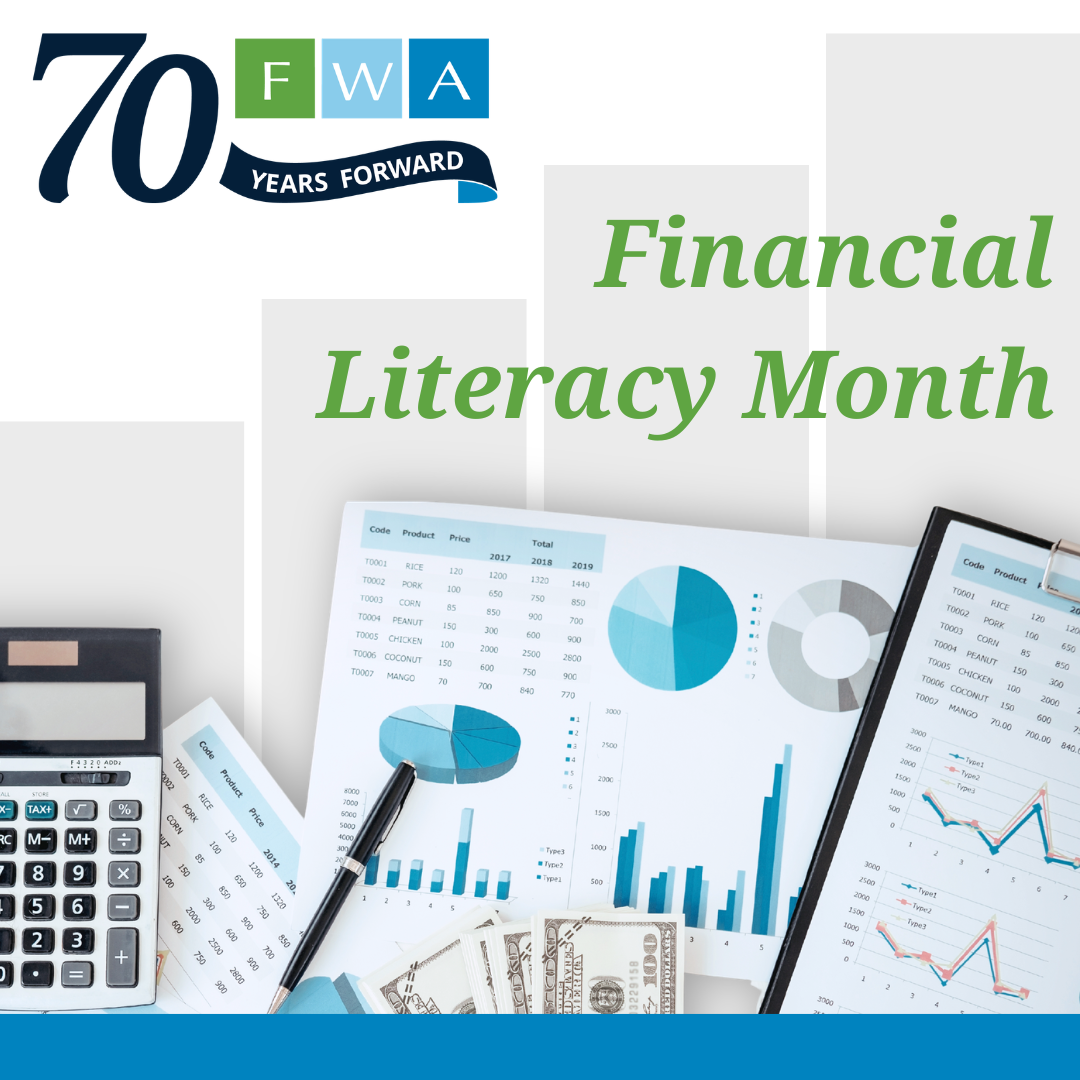
As Financial Literacy Month comes to a close, it is worth stepping back from the usual conversation around budgeting tips and savings strategies to ask a bigger question: What does it really mean to be financially literate today?
For seventy years, the Financial Women’s Association has worked to address that question. Founded in 1956 by eight women who were excluded from key financial conversations, FWA was built on a simple but powerful idea: when people understand their financial choices, they gain the confidence to shape their own futures. As the organization marks its 70th anniversary under the banner of FWA Forward, that mission continues with a clear focus on access, education, and long-term impact.
One of the most enduring expressions of that commitment is Financial Backpack, our financial literacy program. Since 2001, the program has delivered practical, hands-on financial education directly into classrooms, reaching more than 2,800 students. Through interactive workshops, students explore budgeting, saving, credit, investing, and planning for college, gaining tools they can apply immediately.
“Financial literacy is not just about managing money, it is about building confidence, expanding opportunity, and ensuring every individual has a voice in the decisions that shape their future,” says Albana Theka, President of the Financial Women’s Association. “When people understand how financial systems work, they are better positioned to advocate for themselves, invest with intention, and participate more fully in the economy. True financial literacy creates agency, and agency creates momentum.”
That sense of agency shows up in the classroom. “I love when students have that ‘aha moment,’” says Lindsay Starr, Co-Chair of the Financial Backpack Committee and a 25-year veteran of financial services. “I love when they realize either how investing early can help them build their wealth or when they start really understanding how you build credit and why it's important to always take responsibility for payments and how it can impact your life for a very long time.”
For many students, these moments mark the first time financial concepts feel real. “I do believe that they have more confidence in their ability to think about money, manage money, and be proactive in how they're spending after taking our class,” Starr adds.
That shift matters. Early exposure to financial concepts influences how students approach not just money, but their education and career decisions. “I think learning about financial skills early in life is key to making better decisions later in life, not only financially, but also about your career and your education,” Starr says. “The basic information you need to know is that investing in yourself through education will lead to a financially stable life, which helps you not only with your financial wellness, but also health and mental well-being.”
Students also gain practical skills they often do not encounter elsewhere. “Students learn about budgeting and saving, how to properly save for college, the meaning of different types of credit, and how to build your credit,” Starr explains. “These are all life skills that are super important. We also teach a little bit about investing, which is more high-level but also something good for the next step perspective.”
The program’s reach extends beyond a single classroom or workshop. As Jennifer Rodgers explains, “The Financial Women’s Association’s Financial Backpack Program has partnered with Baruch College for nearly a decade, helping 2nd and 3rd year students build financial confidence as they approach graduation and beyond. Students learn how to establish credit, create and manage a realistic budget, especially important in New York City, and understand how their financial decisions carry into adulthood. Baruch serves many first-generation students, and this program provides critical guidance and resources to help them make informed decisions about spending and investing.”
Suzanne Matthews, Co-Chair of the Financial Backpack Committee, has seen the need for this kind of education from multiple angles. After 27 years in corporate and investment banking, she went on to lead financial literacy initiatives in higher education, working directly with students navigating financial challenges.
“In working with students, many had no idea how to budget, save, or build credit,” she explains. “But once they gained those skills, they were more likely to stay in school and plan for the future.”
The impact often extends beyond the classroom. “After one workshop a high school student came up afterwards and asked for an extra set of handouts, so she could take them home and share them with her mother, who could not speak English,” Matthews recalls. “This is very typical in immigrant households, where we often see students sharing our lessons with parents or siblings.”
Over time, the program has adapted to reflect the realities students face today. “We have changed the curriculum to be much more interactive and talking about different case studies in real life scenarios, which is great as it gets the kids talking and asking questions and discussing,” Starr says. “We've also recently brought in college students to help be more relatable to the high school students and that's been very impactful.”
That adaptability proved critical during the COVID-19 pandemic. “It was most definitely a challenge trying to maintain the program during Covid, but we were able to successfully transfer our workshops to Zoom and it worked out well,” Starr says. “It was actually so important to keep it going during that time because a lot of people were experiencing being out of work or reduced incomes.”
For Matthews, that period reinforced a broader point. “Financial literacy becomes even more critical during times of crisis.”
Today, the financial landscape continues to shift. Rising costs, market volatility, and rapid technological change are shaping how young people engage with money. “Young people are facing a number of financial challenges today primarily in the fact that the costs of everything are rising and the market can be very volatile,” Starr notes.
Her advice is direct. “It is important to start thinking about and taking control of your financial life now. It's never too early to save or to understand what a 401(k) is when you first start a job. The earlier you do this the better off they will be in the future.”
As FWA looks ahead, the focus remains clear: continue expanding access, strengthening confidence, and preparing the next generation to navigate an increasingly complex financial world.
Financial literacy, at its core, is about understanding your options, making informed decisions, and having the confidence to move forward.
Seventy years after its founding, the FWA continues to open doors. Through Financial Backpack, that impact is felt one student at a time, in classrooms, in families, and in the moments when something finally clicks.
Because sometimes, all it takes is one lesson for something to finally click, and for a student to realize their future is something they can actually shape.