Hermina “Nina” Batson: Fearless Leadership and a Lasting Legacy in Mentorship

October 2, 2025

What happens when a setback sparks a calling? For Hermina “Nina” Batson, walking away from electrical engineering wasn’t the end of her high school dream; it was the start of a fearless career in financial services—one built on integrity, courage, resilience, fortitude, determination, and a strong commitment to giving back. The daughter of Panamanian parents, Nina grew up on Long Island. At Hofstra University, she took steps to create opportunities for every student to feel included and have the chance to succeed. “Every student must have the opportunity to be successful, even if they don’t know how,” she says, a belief that continues to guide her.


Long before Nina became a corporate leader, she taught financial literacy to underserved individuals in the communities she served, helping them understand the basics of money management and find pathways to independence. Mentoring, in one form or another, has always been part of her story.
Professionally, Nina has worn many hats and handled each with authority. She spent 25 years with FWA corporate sponsor MUFG, earning a reputation for expertise and steady leadership. Most recently, she was at Barclays as Director, Head of Regulatory Engagement in Internal Audit, where she addressed complex regulatory issues. But ask Nina where her true legacy lies, and she won’t point to a title or a promotion. She’ll talk about mentoring.


Since joining the Financial Women’s Association in 2008, Nina has dedicated herself to strengthening its mentoring programs. As Membership Chair, she worked to promote the organization's growth by creating a student membership category and providing more networking opportunities for young women with women in finance. During her FWA presidency, she also restructured partnerships to ensure all women could access both professional and personal development opportunities. This approach helped them develop skills “off-the-job” through increased knowledge sharing and confidence building, enabling women to connect, receive mentorship, and learn alongside others in the financial industry for their on-the-job success.


For Nina, mentorship is not just about advancing careers, nor is it one-sided. It is both a personal duty and a call to action. Mentorship involves building confidence where there is doubt, providing guidance where there is uncertainty, and inspiring others to lead courageously. It’s about creating a legacy. It’s about improving the financial industry so success is shared and opportunities are open to others. “Mentorship is very important. It provides mentees and others seeking a relationship with the chance to grow, share, learn, and shape the future of finance, one person at a time. After all, our greatest glory is never in helping ourselves, but in helping others,” she says.


Nina’s leadership has significantly impacted her mentees, colleagues, and the FWA itself. She has been a catalyst for growth, inclusion, and for creating space where voices that were once unheard now take center stage. She listens, she learns, and she walks alongside her mentees with humility and patience. She also ensures her mentees understand what’s expected of them and provides them with the tools to succeed. Additionally, she quickly reminds mentors that the relationship is mutual. Her mentees can feel this difference. Tioluwani Ariyibi, a student at Seton Hall’s Stillman School of Business, is one of them. “There’s no stopping my mentee. She’s a very determined, driven, and resilient person. Her cultural upbringing and respect for her elders help her navigate her current environment,” Nina says proudly.


And she’s clear that the work isn’t finished. Through the FWA’s mentoring programs at Baruch, Seton Hall, the High School of Economics and Finance, and the FWA’s Wall Street Exchange program, Nina sees the opportunity for FWA members to carry the torch forward, invest their time, share their wisdom, and mentor the next generation of finance leaders while also improving themselves. “Change happens when we decide to show up,” she says. Her advice to those following in her footsteps is as bold as her own example: “Don’t wait to be invited to the table. Pull up your own chair!” 
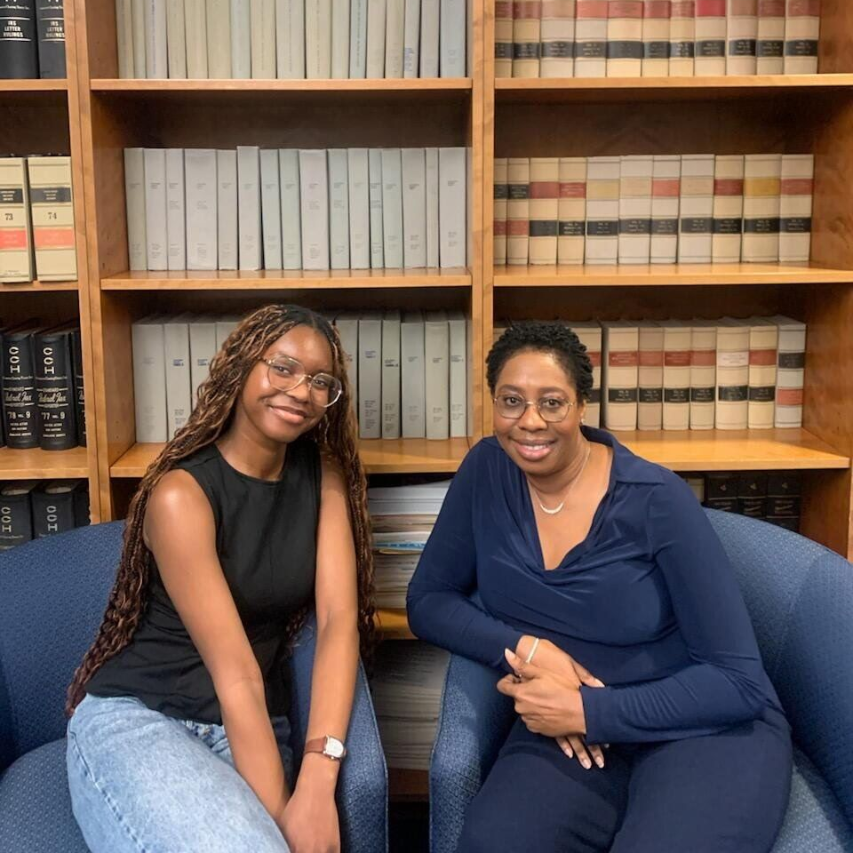

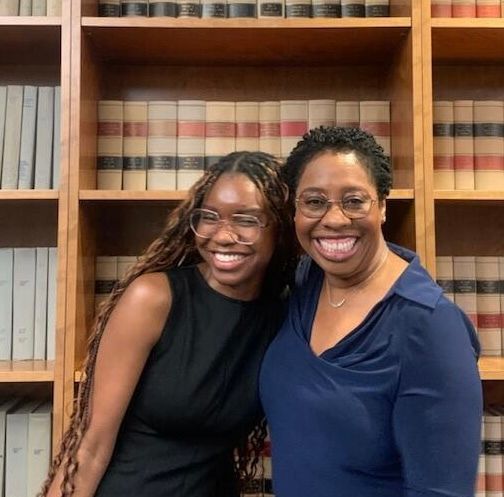
Nina (right) and her current mentee, Tioluwani (left).
May 14, 2026
By Sherree DeCovny Back in 1785, Scottish poet Robert Burns wrote, “The best-laid plans of mice and men often go awry.” The line still resonates today: even the most carefully constructed plans can be disrupted. What ultimately determines success is not perfect foresight, but adaptability and the ability to pivot when conditions change. That lesson was brought into sharp focus for this year’s International Business Conference. Originally planned for the UAE in April, the event had to be completely reimagined when conflict with Iran escalated in February. Months of preparation were set aside, and the format was rebuilt in a matter of weeks. The result was a hybrid approach: a virtual lunch panel on May 5, followed by a half-day in-person gathering in New York City on May 6 — hosted at Akin in partnership with ABANA.co, with hospitality from HE Amna Almheiri and the UAE Consulate in NY — bringing together nearly 100 participants.
April 30, 2026
By Robert Brown The student stayed behind after the workshop. While others filtered out, she walked up quietly and asked for an extra set of materials. Not for herself, but for her mother, who didn’t speak English. She wanted to take the lesson home. That moment says more about financial literacy than any definition ever could. For many young people, the question isn’t just Can I afford this? It’s Do I understand how money works at all? And more importantly, Can I use that knowledge to shape my future? That gap between access and understanding is where confidence is either built or lost. The reality is, most students are never taught these skills in a meaningful way in school. And for many, this is the first time anyone has explained it in a way that actually sticks.
April 23, 2026
For months, FWA Executive Director Alissa Desmarais and I had been building toward something incredible: a six-day International Business Conference in the UAE, complex and high-stakes, the kind of undertaking that requires you to hold a hundred things in your head at once while also holding your team together, your partners together, and yourself together. The FWA has more than 40 years of experience organizing international conferences around the world; what we were doing was not new. But as we stepped into our new roles as the conference organizers, with the support of a great IBC committee, this one felt different. More meaningful, because it was ours. We were proud of what we were creating. And then the world changed around us. I won’t pretend the decision to pivot was easy, because it wasn’t. There is a particular kind of grief that comes not from losing something you already had, but from letting go of something you had worked so hard to build and had not yet gotten to experience. We had to look at the geopolitical reality of the region, at what was happening, at what we could not control, and make a call. The kind of call that no planning document prepares you for. We chose to pivot. On May 5th and 6th, FWA will host the Global Capital and Leadership Forum in New York. A virtual lunch panel, followed by an in-person morning program at Akin, right in the heart of the city. Smaller in scale, yes. But not smaller in purpose. We kept the questions we had always meant to explore: how shifting alliances and energy transitions are redrawing the map of global capital, what resilient leadership looks like in a world that will not hold still, how women are shaping the future of finance across cultures and geographies. Her Excellency Amna Almheiri, Consul General of the United Arab Emirates in New York, will close our forum. The relationship did not end when our plans changed. The dialogue did not stop. It just found a different room. What I have learned from this experience is something I keep coming back to: a pivot is not the opposite of commitment. Done with clarity and care, it is one of commitment’s truest expressions, because it means you care more about the mission than about being right about how you planned to serve it. It means you can look at the people who gave months of real effort to a plan that changed and help them see that nothing they did was wasted, because it wasn’t. It means you can let go of the version of success you had pictured and trust that a different shape can carry the same substance. I think about the women in this community who have had to do this in their own careers and lives. Who had to walk away from something they had built toward for years, not because they failed but because the world shifted and they were honest enough to shift with it. That takes courage. It takes the kind of steadiness that is very easy to admire from the outside and very hard to practice from the inside. The forum is still taking shape. The work continues. And I am proud of what we are making, not in spite of how we got here, but because of it.
April 9, 2026
The MENA Capital Landscape: Risk, Resilience & the Road Ahead May 5–6, 2026 Join the Financial Women's Association for a timely conversation on sovereign capital, energy transition, AI, and the geopolitical forces reshaping global finance. When our UAE trip was cancelled, we immediately looked for ways to bring the experience to our community here in NYC - this forum captures the spirit, substance, and strategic importance of that journey. Registration details coming soon - save the date on your calendar now! Virtual Lunch Panel · Tuesday, May 5 In-Person Morning Program in New York City · Wednesday, May 6 One registration. Two experiences. One conversation.
More Posts