Women’s History Month: Seventy Years of Change and the Women Who Refused to Wait
March 17, 2026
by Robert Brown
Every March, Women’s History Month invites us to reflect on the women who challenged expectations, opened doors, and changed the course of industries that once excluded them. For the Financial Women’s Association, that reflection is personal. As the organization celebrates its 70th anniversary, the story of FWA mirrors the broader story of women’s progress in finance. What began in 1956 with eight determined women has grown into a global community that has helped generations of women enter, navigate, and lead in an industry that once shut them out.
Those eight enterprising women did something quietly radical. They were working inside investment banks and financial institutions at a time when their talent was welcome, but their presence in leadership circles was not. The established associations of the day did not admit women. Access to the conversations, relationships, and influence that shaped the industry flowed through rooms they were not allowed to enter.
So they built their own.
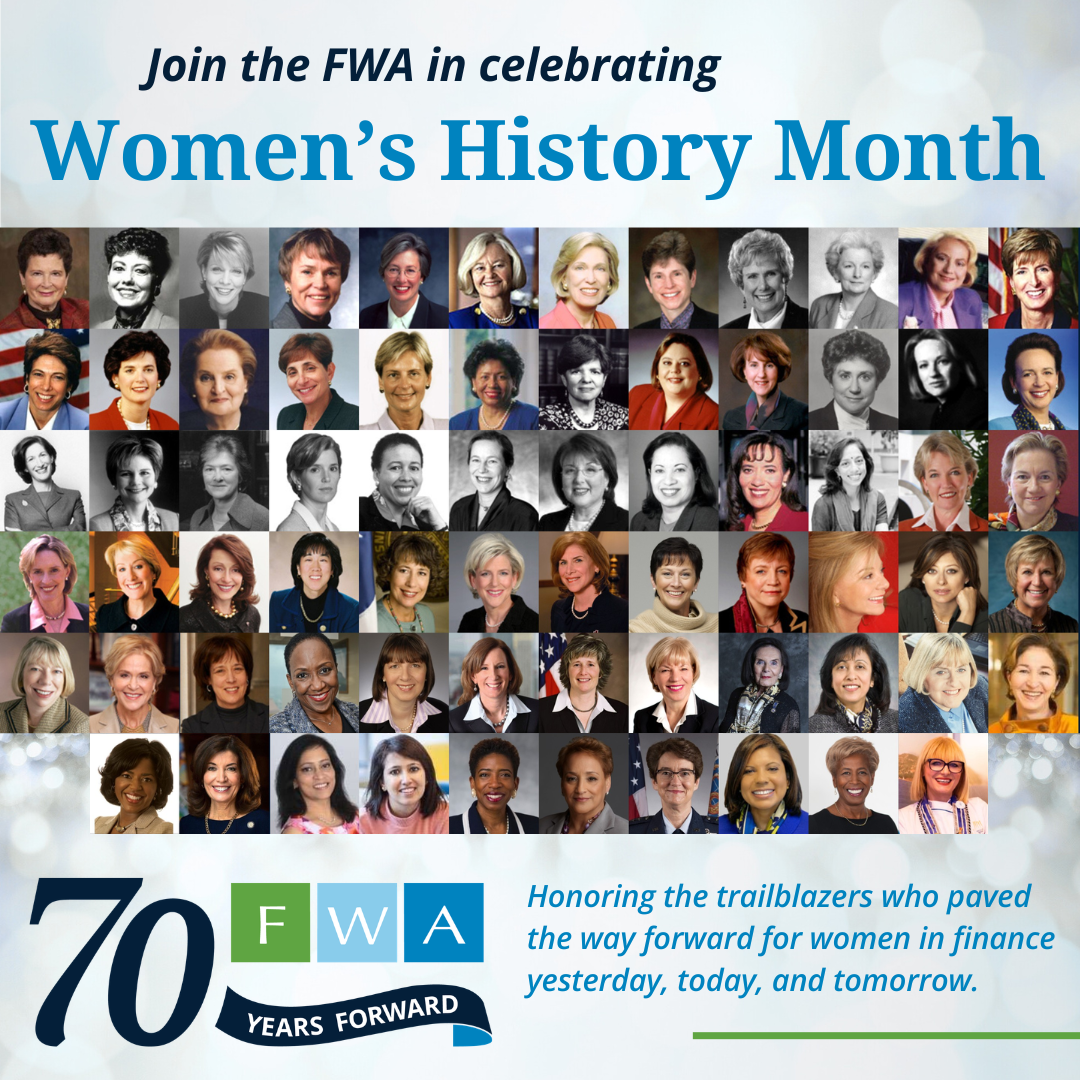
What began as an act of determination became the Financial Women’s Association, a community designed to support women in finance, share knowledge, and open doors where none existed. Seventy years later, the impact of that decision is unmistakable. When the organization was founded, women in finance were not climbing ladders. They were fighting for entry into the building. Today, women are not asking for seats; they are decision-makers. “Seventy years ago, women in finance were fighting for access. Today they are shaping markets, leading institutions, and influencing the future of the industry,” notes Alissa Desmarais, FWA Executive Director and Chief Operating Officer.
The journey from access to authority did not happen overnight. It unfolded over decades of persistence, legal change, economic transformation, and communities like the FWA that ensured women were not navigating the industry alone.
When Betsy Werley began her career, the expectations placed on women were remarkably narrow. Betsy, who later served as FWA President from 2001 to 2002 and now chairs the FWA Baruch College Mentoring Program, remembers how limited the options once were. “Through the 1960s, almost all women going to college had three career options: teacher, nurse, or secretary,” she recalls. “I’m still amazed that in 1956 there were eight young women working in investment banks.” Even pursuing a professional degree was not always encouraged. “In 1975, when I told my college advisor that I planned to become a lawyer, he encouraged me to get a teaching degree as well, just in case.”
Structural change slowly began to reshape the landscape. Laws addressing workplace discrimination and equal pay established new protections. But one of the most transformative shifts came through financial independence.
As Betsy explains, “Until 1974, women couldn’t get credit cards, a mortgage, or a business loan in their own names. Banks would consider their applications only if they had a male co-sponsor.” The Equal Credit Opportunity Act of 1974 changed that reality. With access to credit came new opportunities for entrepreneurship, home ownership, and investment participation. Credit was not just access to money. It was access to power. The ripple effects extended across the economy. Women’s participation in the workforce grew dramatically. Women now earn the majority of bachelor’s and master’s degrees in the United States. Women-owned businesses continue to expand at remarkable rates. As financial independence grew, so did influence.
Kristin McDonough, FWA President from 2008 to 2009, has seen firsthand how women’s economic power is reshaping the industry. Women’s financial independence, she notes, has changed how companies think about leadership and decision-making. Corporations increasingly seek women on advisory boards and leadership teams to better understand the female consumer and broader market dynamics. Nationwide, public and private initiatives have propelled women’s penetration into sectors from city contracting and construction to television, film-making, and wider arts administration. Women-owned enterprises now benefit from broader access to capital and investment-readiness programs that match female business owners with impact investors and founder-friendly lenders. Strong networks of investors and allies targeting women of color in particular have expanded, too.
Throughout these decades of change, the Financial Women’s Association did more than witness progress. It helped build the infrastructure that supports it. Initiatives like the Wall Street Exchange Program, launched in 1975, introduced students to careers in finance. The High School Mentoring Program, established in 1986, continues to support young women from the High School of Economics and Finance. Scholarships launched in 1983 have helped students pursue graduate education, while mentoring partnerships with Baruch College and Seton Hall University connect aspiring professionals with experienced leaders across the industry. These programs have become one of the organization’s most lasting legacies. For many participants, they become defining moments.
Adelisa Music, a mentee in the FWA Baruch College Mentoring Program, describes the experience as transformative. “As I progress in my career, I definitely envision becoming a mentor myself. This program has shown me the importance of mentorship and a group of people who believe in each other. The guidance and support I received from the FWA Baruch College Mentoring Program has served as a hand when I needed it most, and having the opportunity to give back and become a mentor myself in the future would be a great opportunity and privilege.” Mentorship has always been central to the organization’s philosophy.
As Laleh Bashirrad, Managing Director at BNP Paribas and mentor in the FWA Baruch College Mentoring Program, puts it simply, “The journey is as important as the destination.”
The impact extends far beyond individual careers. It strengthens the industry itself. Maria Maris, an FWA President’s Circle member and Co-Chair of the Global Markets and Economy Committee, believes the next generation will benefit directly from these investments. “I think it’s going to help the industry gain better talent, more support, and women and others will be able to gain a lot more. Especially the educational programs and the mentorship programs, those are the ones that we are trying to drive the most, and I think the next generation will gain from that.”
Despite the progress of the past seventy years, the work is not finished. The gender pay gap persists. Wealth disparities remain. Caregiving responsibilities continue to shape career trajectories for many women. The work of the FWA remains vital.
In 1956, women in finance were still proving they belonged. Today, women are building capital, companies, and global influence. Reflecting on how far the industry has come, Betsy offers a lighthearted perspective on the moment that started it all. “We’re glad the Young Men’s Investment Club said no.”
That rejection sparked something powerful. Eight women created a community because they were not invited into one. Seventy years later, the Financial Women’s Association stands as proof that when women build institutions, they reshape industries.
Albana Theka, current President of the Financial Women’s Association (2025–2027), believes the organization’s role is more critical than ever as the industry navigates rapid global and technological change. “In a world of constant change, not just geopolitically but with AI and the future of technology, organizations like FWA are more relevant than ever,” she says. “Our mission to mentor, upskill, and advance women in finance continues to be essential. For 70 years, we’ve been a steady hand through times of change, and we aim to remain an unwavering pillar supporting women as they shape the future of financial services.”
In this anniversary year, the organization is focused on FWA Forward, building on its legacy by expanding opportunity, strengthening leadership pathways, and preparing the next generation of women to lead across the financial industry. “As we celebrate seventy years, we are not only honoring the women who built this organization, we are looking ahead,” says Desmarais. “Through mentorship, education, and community, FWA continues to create opportunities for women to shape their careers and the future of finance.”
Seventy years ago, women in finance fought for entry.
Today they influence outcomes.
And the next chapter will not be about catching up.
It will be about leading what comes next for finance.