Global Capital Leadership: Rethinking Strategy in an Uncertain World

May 14, 2026

By Sherree DeCovny


Back in 1785, Scottish poet Robert Burns wrote, “The best-laid plans of mice and men often go awry.” The line still resonates today: even the most carefully constructed plans can be disrupted. What ultimately determines success is not perfect foresight, but adaptability and the ability to pivot when conditions change.


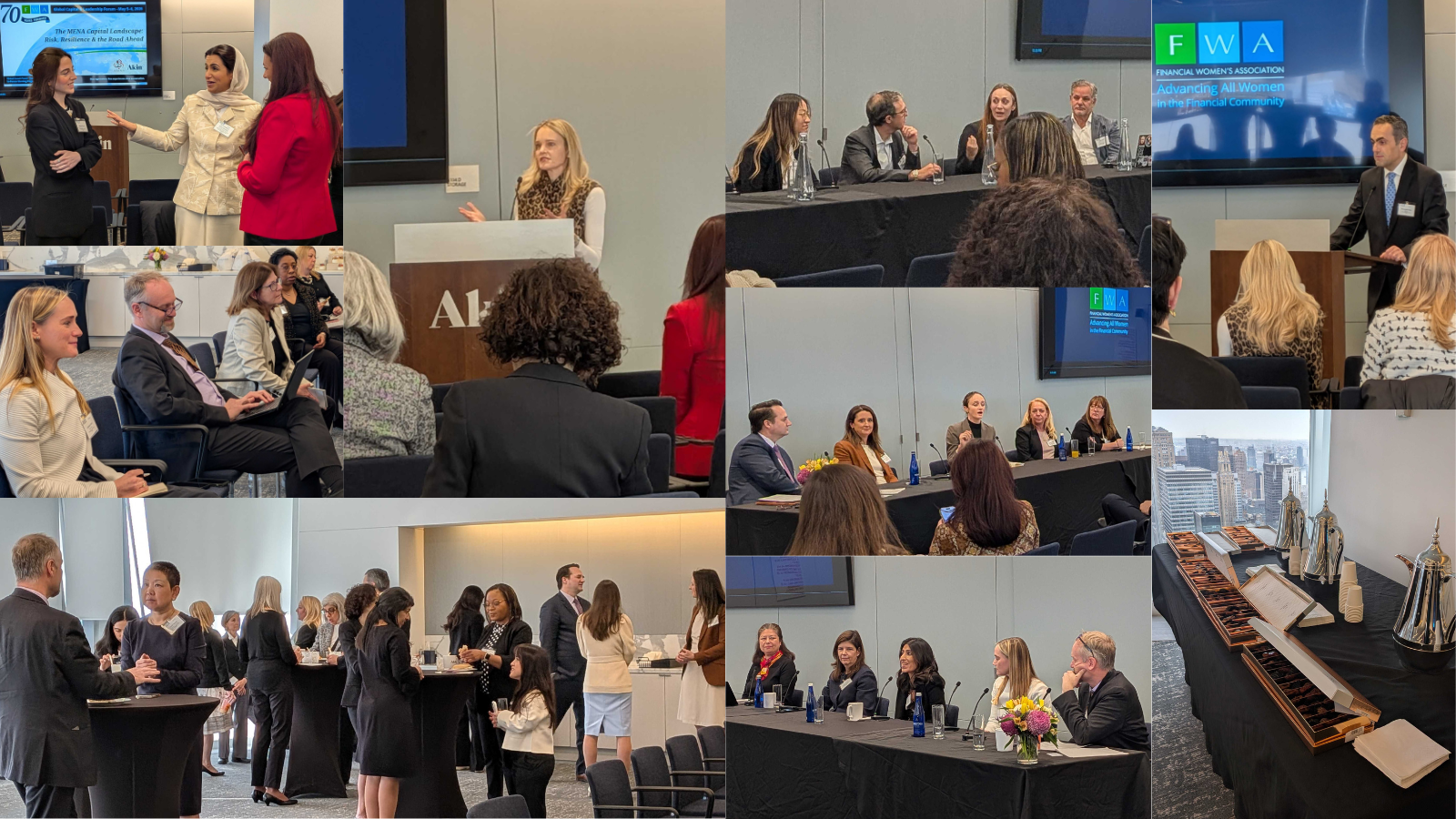
That lesson was brought into sharp focus for this year’s International Business Conference. Originally planned for the UAE in April, the event had to be completely reimagined when conflict with Iran escalated in February. Months of preparation were set aside, and the format was rebuilt in a matter of weeks. The result was a hybrid approach: a virtual lunch panel on May 5, followed by a half-day in-person gathering in New York City on May 6 — hosted at Akin in partnership with ABANA.co, with hospitality from HE Amna Almheiri and the UAE Consulate in NY — bringing together nearly 100 participants.
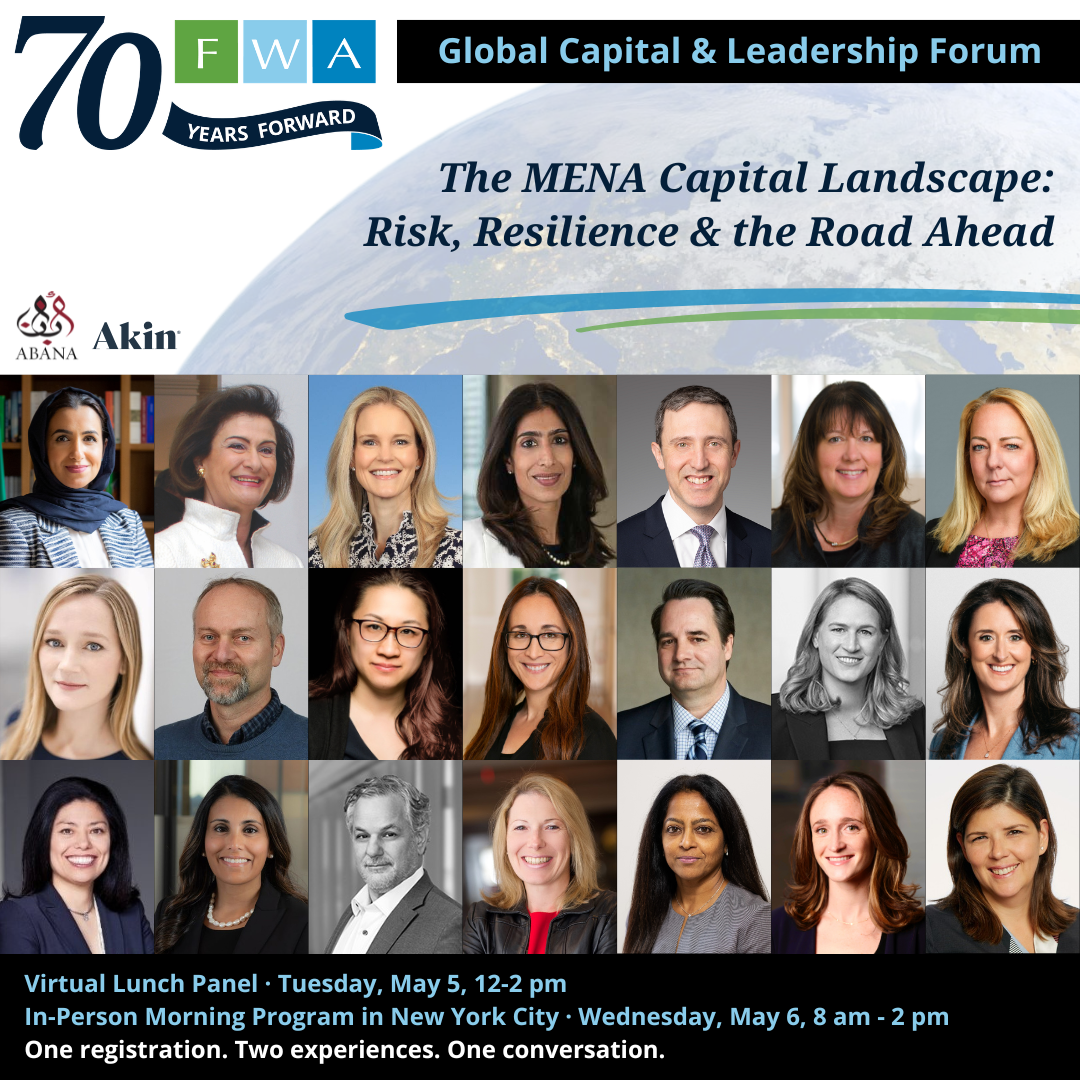
More than 20 senior speakers — including diplomats, economists, investors, bankers, lawyers, educators, technologists and analysts — examined the forces reshaping global capital flows and the implications for markets, policy and long-term investment strategy.


A central theme was the shift away from globalization toward a more fragmented, multipolar world. This is reshaping trade, supply chains and investment decisions, particularly in strategic sectors such as energy, semiconductors and critical minerals. Competition between the U.S. and China is increasingly defined by artificial intelligence leadership, spanning access to talent, chips, computing infrastructure and energy capacity.


AI investment continues to support equity markets, especially in technology, even as concerns grow about energy constraints, uneven growth and concentrated market performance. Alongside this, defense spending, infrastructure investment and fiscal stimulus remain important drivers of economic activity.


Inflation remains the dominant macroeconomic risk. Structural pressures — including tight labor markets, aging populations, constrained immigration, energy volatility and supply chain fragility — suggest inflation may remain higher than historical norms. Some participants noted that markets may be underestimating the risk of further interest rate increases, particularly if geopolitical tensions push oil prices higher and feed into broader price pressures.

Energy has become a strategic and economic concern. AI-driven demand for electricity, combined with geopolitical instability, is reshaping investment priorities. Energy is now increasingly viewed through the lens of security and resilience, not just cost and sustainability.


While renewables, battery storage and nuclear remain central to long-term decarbonization strategies, near-term constraints have elevated the importance of oil and gas. As a result, investors and governments are pursuing diversified energy portfolios, reflecting both climate goals and energy security concerns.


Capital is flowing into infrastructure, liquefied natural gas, power generation and data centers tied to AI expansion. However, investors are applying more stringent due diligence, particularly around regulatory risk, stranded assets and technological uncertainty. The emerging consensus is an “all-of-the-above” energy strategy.


Generative AI is accelerating productivity across industries by streamlining coding, research, communication and operations. Organizations are embedding AI into everyday workflows, enabling a shift toward higher-value work.


At the same time, concerns are rising around cybersecurity, fraud and overdependence on AI systems. AI-enabled impersonation, phishing and automated vulnerability discovery are increasing risk exposure, prompting stronger governance and security frameworks. Agentic AI, in particular, was highlighted as both an opportunity and a potential risk multiplier.


Finally, sovereign wealth funds, managing roughly US$13 trillion globally, are evolving from passive investors into strategic actors. Geopolitical uncertainty and technological disruption are making outcomes less predictable and challenging traditional investment cycles.


As a result, capital allocation is increasingly focused on resilience, flexibility and long-term optionality. While diversification away from U.S. assets is often discussed, the scale, liquidity and depth of U.S. markets continue to anchor global portfolios. Sovereign investors are also pursuing broader national objectives, including knowledge transfer, industrial development and economic diversification alongside financial returns.


In many ways, the discussions at this year’s conference brought us full circle to Robert Burns’ reminder that even the best-laid plans can change course without warning. Whether in geopolitics, markets, energy systems or technology, certainty is increasingly elusive. Yet the same volatility that disrupts plans also creates space for reinvention. The ability to adapt — to rethink assumptions, reallocate capital and reimagine strategy in real time — is what ultimately turns disruption into opportunity.
August 6, 2026
On July 7, 2026, interns in the FWA’s Wall Street Exchange (WSE) Program came together virtually for the fourth session of the summer, titled “Strategic Communications,” sponsored by Joele Frank. Jordan Resnick, HR Specialist, and Heather Wallach, Talent Acquisition Manager, introduced interns to Joele Frank and the world of strategic communications, a field many interns had never considered as part of the financial services landscape. Jordan and Heather explained that Joele Frank advises companies through their most consequential moments, from mergers and acquisitions to shareholder activism, restructuring, leadership transitions, and crisis response, ranking as the #1 U.S. M&A PR advisor and #1 shareholder activism defense advisor in the industry. To bring the firm’s work to life, Jordan and Heather walked interns through several high-profile engagements, including Joele Frank’s support of Warner Bros. Discovery, a current client, as an example of how the firm helps companies navigate high-stakes, high-visibility situations in real time. The discussion underscored that effective strategic communications require not just managing a narrative, but protecting a company’s credibility with every audience watching, from investors and employees to the media and the public. Jordan and Heather also broke down the many disciplines that fall under the strategic communications umbrella, including investor relations, corporate and media relations, governance and corporate stewardship, design, and digital strategy. They emphasized that the firm hires like a law firm, bringing on Account Associates directly out of undergrad, and encouraged interns interested in the field to build strong writing skills, stay current on financial news through outlets like The Wall Street Journal and Bloomberg, and consider Joele Frank’s summer internship or full-time Account Associate programs as a path into the industry. Interns had the opportunity to ask questions throughout the presentation before breaking into small groups to discuss their key takeaways from the session and reflect on what they had learned so far this summer. Many interns shared that the session reshaped their understanding of what a career in PR actually looks like, moving past common misconceptions to reveal a discipline built on strategy, judgment, and relationships. Several groups also highlighted the session’s emphasis on soft skills, noting how much communication, adaptability, and emotional intelligence matter in a field so often mistaken for being purely about writing press releases. At the conclusion of the session, the WSE spun the wheel to award a CFA Society Student Membership, sponsored by the CFA Society, to Sarah Convery. Congrats, Sarah! A huge thank you to Jordan Resnick, Heather Wallach, and the entire Joele Frank team for giving interns a behind-the-scenes look at the strategic communications industry. The WSE Co-Chairs and Committee extend their sincere thanks and appreciation to the President’s Circle Firms, the Partnership Circle Firms, and the Friends of FWA for their unwavering support and generosity to the interns and the Wall Street Exchange Program. 
July 30, 2026
On June 23, 2026, the FWA's Wall Street Exchange (WSE) Program 2026 cohort gathered virtually for the third weekly session of the program. The session was sponsored by Knopman Marks, a boutique NYC-based firm known for its high-performance training for securities licensing exams. Brian Marks, Co-Founder and President of Knopman Marks & Highwire, led a practical, high-energy conversation titled "Foundations for Professional Excellence." The first topic that Brian discussed was the habits that drive a successful early career and why those habits matter well beyond an internship. The skills interns build now are the same ones that separate a good intern from a great one; and that later separate a good professional from a high performer. He described high performance, not as a matter of raw talent, but rather as a set of behaviors one can practice. The habits put in place early are the ones that compound. The interns who start practicing them now are the ones who carry them from an internship with limited responsibilities into executive-level responsibility later. The interns then reviewed a series of four credibility builders and four credibility killers, proactive behaviors that shape how senior professionals come to trust a young professional. Owning your mistakes and learning from them is a key credibility builder and surprising your manager with bad news at the last minute is a major credibility killer. The interns then rated themselves on a Strategic Action Matrix, a four-box framework charting how strategy: “Are you focused on the right things?” interacts with execution: “Are you doing the work to get there?”. He asked interns to consider one or two new habits they could put to work immediately. Brian impressed upon the interns that professional excellence is thinking strategically and executing well, while stepping outside their comfort zone, stretching past their limits and building resilience when the plan changes. Brian then introduced the five strategies in The Intern Success Playbook, emphasizing that interns are building their personal brand every day through what others observe. Whether it's staying focused instead of constantly checking a mobile phone or taking the initiative to connect with colleagues, everyday actions shape how others perceive them. His five strategies focused on working and communicating smarter, building authentic relationships, and paying close attention to perception and details. The interactive format kept energy high. Interns enjoyed the live Q&A, the quiz, and the chance to ask questions. A screen full of Zoom hearts spoke to the value they found in his advice. A huge thank you to Knopman Marks and Brian Marks for investing their time and expertise in the WSE 2026 cohort. The session concluded with the WSE Committee awarding intern Sarah Convery a CFA Student Annual Membership, sponsored by the CFA Society. The WSE Co-Chairs, Gerri Bostick and Laura Smith Dunaief, and the WSE Committee extend their sincere appreciation to Brian Marks and Knopman Marks for their support in making this virtual session a success. We also thank the FWA President Albana Theka, FWA leadership, volunteers, sponsoring firms, and participating employers for their continued commitment to providing this valuable experience to the next generation of financial professionals. 
July 23, 2026
Interns participating in the 2026 Wall Street Exchange (WSE) Program gathered virtually for the program’s second session, an interactive panel discussing “Networking Best Practices.” Sponsored by S&P Global, Northwestern Mutual, and Wells Fargo, the session brought together three financial services professionals to share how they have built and sustained meaningful relationships throughout their careers. The discussion was moderated by Dan Yu, Co-Founder of FutureProof You and Director of Partnerships at the talent development nonprofit Ascend Leadership . After a long career on Wall Street, Dan pivoted to recruiting and career coaching, work that has since taken him from coaching college students to C-level executives. He set an energetic, conversational tone for the panel, joined by Jena Angeliadis, Executive Director and Senior Lead Product Manager at Wells Fargo; Antonietta Gaudio, Recruiting Operations Manager at Northwestern Mutual; and Christina Siekierski, Senior Product Manager at S&P Global.  Jena traced her own path across American Express, JPMorgan Chase, and now Wells Fargo, encouraging interns to think of networking less as a transaction and more as an ongoing practice built on curiosity and follow-through. She pointed to her own career transitions, including launching the Chase Sapphire Reserve for Business card, as proof that relationships built early in a career often resurface in unexpected and valuable ways later on. Drawing on nearly 14 years in talent acquisition, Antonietta spoke about her “white glove” approach to building trust, urging interns to lead every interaction with empathy and authenticity rather than a polished pitch. She reminded the group that confidence in networking is built from within, and that the goal of any conversation should be genuine connection, not simply a foot in the door. Christina offered a product manager’s view of networking, describing how cross-functional relationships across product, commercial, and client teams at S&P Global have been just as important to her growth as relationships built outside the office. She encouraged interns to treat every colleague, not just senior leaders, as a connection worth investing in. To help interns put the panel’s advice into action, Dan closed the session with five “homework” assignments to complete in the weeks ahead: Update your LinkedIn profile Build a Linktree or dotcard Join or start a virtual networking group Reply to your three oldest unanswered text messages, using voice text Call someone you haven’t spoken with in a year A huge thank you to Dan Yu, Jena Angeliadis, Antonietta Gaudio, and Christina Siekierski, and to S&P Global, Northwestern Mutual, and Wells Fargo, for helping interns build the confidence and tools to network with purpose. At the conclusion of the session, the WSE Committee awarded a CFA Society New York student membership to Angela Lin. The WSE Co-Chairs and Committee extend their sincere thanks and appreciation to the President’s Circle Firms, the Partnership Circle Firms, and the Friends of FWA for their unwavering support and generosity to the interns and the Wall Street Exchange Program.
July 16, 2026
The 2026 Wall Street Exchange (WSE) Program celebrated the start of its landmark 50th year on June 7 with an o rientation and networking session hosted by the CFA Society New York at its Manhattan headquarters. This year, WSE brings together 45 students from 28 universities representing 18 diverse financial institutions, insurance companies, fintech firms, and other organizations across the financial services industry. The evening provided participants with an opportunity to meet their peers, engage with FWA volunteers and program leaders, and gain insight into the experiences and opportunities that will shape their summer journey. FWA President Albana Theka welcomed the 2026 cohort and shared words of encouragement as interns began this important chapter in their professional development. She emphasized the value of cultivating meaningful relationships, seeking out mentors, remaining open to new perspectives, and taking full advantage of the opportunities available through WSE. Elizabeth Park, CFA Society New York’s Director of Membership, then introduced participants to the Society’s mission, resources, and commitment to advancing professionalism within the investment industry. Joy Lowenwirth of th e CFA Institute continued, highlighting the importance of ethical leadership, continued education, and lifelong learning while providing attendees with valuable insight into the CFA designation and the evolving landscape of the financial profession.
More Posts